Showing posts with label Exit Strategy. Show all posts

Thursday, 17 November 2016

Get Rid of Overtrading Once and for ALL

Overtrading

Overtrading refers to taking so many trades to the extent that the trader’s edge erodes. It is bad for all kinds of traders and even investors. But it is truly a cardinal sin for day traders.

I know this day trader called Hubris. He has always been a profitable trader, or so he claims. Hearing that he is such a wonderful trader, I grabbed the chance to watch him during one of his trading sessions.
Yes! 2 points in pocket. This is easy.
Let’s see… oh, there’s another trade over there. I’m shorting right now, just in time.
Ah, lost a point. We’ll only get better. See! Right there, there’s a chance to recoup my losses.
Sheeeesh, two losses in a row mean that the next trade will be a winner. I must continue.
At the end of the session, Hubris wonders how did he manage to wipe out 30% of his trading account in a single session.
Does Hubris’ experience sound familiar? Does it sound like you?
If you answered yes, then you might be able to make vast improvements in your trading performance after reading this article.

THE ROOT OF OVERTRADING

UNREALISTIC EXPECTATION OF MARKET VOLATILITY

Day traders need volatility to make a living. When the market is not going anywhere, we should not trade.
However, because of a lack of understanding of the market and the need to trade, traders rationalize and tell themselves that the market is going to move.
Dr. Brett Steenbarger, the author of The Daily Trading Coach: 101 Lessons for Becoming Your Own Trading Psychologist, explained this mismatch of expectationsreally well on his blog.

OVERESTIMATION OF TRADING SKILLS

This is Hubris. He thinks he cannot lose, and is invincible in the market. He might understand the market well, but he does not know himself.
He over-estimates his trading skills and is confident that he can trade in any market condition.

THE COMMON WORK ETHIC

Our innate work ethic dictates that we must work for income. That is perfectly correct.
What is wrong is the meaning of “work” for traders. Traders tend to think that work means taking trades. That is wrong, and that is what leads to overtrading.
We are working when we are waiting for the best trade.
We are working when we are following our trading rules and executing the trades.
We are working even when we are not taking trades. And if we do our work correctly, we will get paid.

FIXING OVERTRADING – THE ONE BULLET ACTION PLAN

THE SUPREME RULE TO COUNTER OVERTRADING

The One Bullet Action Plan has just one simple rule.
Take only one trade a day.
No exception. No rationalization.
Take one trade. If it’s a winner, shut down your trading terminal. If it’s a loser, shut down your trading terminal.
After shutting down your computer, go do something you enjoy. Play with your kids. Read a book. Do something that takes your mind off trading.

WHY DOES IT WORK AGAINST OVERTRADING?

As we discussed above, the causes of overtrading are psychological and diverse. They mostly involve our minds playing games with us.
So our solution focuses on physical actions. (Shut down the computer and go play.) Instead of convincing your mind, let’s move away physically .
There is only one simple but absolute rule. The more rules there are, the more space for your mind to convince you to take another trade. Having only one absolute rule denies your mind of rationalization.

ARE YOU SURE TAKING ONE TRADE A DAY IS A GOOD IDEA?

Your mind is already trying to rationalize away this supreme rule. So let’s get it out of our way.
Knowing that you have only one bullet will force you to take only the best trades. You will be more alert and more selective in your trades. More likely than not, your trading performance will improve.
Taking one good trade a day is enough for your trading edge (if any) to materialize. Assuming you do have a trading edge, how much you can earn depends on the amount of your risk capital.
There is also the problem of undertrading which means that we are not maximizing the full potential of your trading strategy.
Don’t worry about that. Far more traders ruin their account because of overtrading compared to undertrading. In fact, no trader has ever lost their trading account by not taking a single trade.

CONCLUSION – YOU MUST STOP OVERTRADING

You must stop overtrading because it is a huge obstacle to your trading success.
You must stop overtrading because only you can do it. Although the One Bullet Action Plan works against overtrading, you have to commit to it.
Don’t be like Hubris. My other friend, Sophrosyne, is a better trader. 

Now, you knew this already. 
Will you add this on your #NotesToSelf trading journal? 
#CuttingLosses 


Source: Galen Woods

Monday, 14 November 2016

The Ultimate Trading Business Checklist: 10 Things You Must Know


The bad news is that successful traders conduct their trading activities like a business. This is because businesses make money, and hobbies don’t. To make money, having a business mind-set is essential. Hence, traders cannot avoid running a business.
The good news is that a trading business is easier to manage than other businesses. (I’m referring to the long/short trading business, and not the import/export type.)
We’ve condensed what every trader needs to know into the 10 items listed below. To become a professional trader, work your way down this list.
The Ultimate Trading Business Checklist

DEFINING YOUR TRADING FIELD

Trading is our industry. But what’s your sub-industry?
This is the first question a trader has to answer. This is because it defines the playing field for your trading business.

1. DECIDE ON YOUR TRADING MARKET.

What market will your trading business deal in?
The common options are:
  • Individual Stocks – publicly traded ownership of companies
  • Stock Indices – a performance measure of a basket of stocks
  • Commodities – foodstuff, metals, fuels, etc
  • Forex – the exchange rate between two currencies
Research the market that interests you. Make sure that you understand it works.
For a start, answer these questions:
  • Which fundamental forces drive the market? (Even technical traders need a basic understanding of the market’s fundamentals.)
  • What are the active trading hours of the market?
  • What are some popular examples of your chosen market? (For e.g. S&P 500, NASDAQ 100, and DOW 30 are popular stock indices.)

2. CHOOSE YOUR TRADING INSTRUMENT.

After deciding on your trading market, you need to choose a financial instrument to express your market views.
Here are your options:
  • Direct (Spot)
  • Options
  • Futures
  • Contract-For-Difference (CFD)
  • Spread-Betting

SPOT TRADING

You can trade stocks and forex directly (in the spot market). Some stock indices might be tradeable as exchange-traded funds (ETFs).

DERIVATIVES TRADING

The other four instruments – options, futures, CFDs, and spread-betting – are derivatives. This means they derive their market worth from the value of underlying assets.
For instance, a call option on AAPL appreciates in value when the underlying AAPL stock rises. Another example is a futures contract on crude oil (CL). Its value falls when the price of crude oil falls.
Why do we trade derivatives?
First, it is impractical or impossible to trade the underlying market.
Buying physical commodities is impractical and unnecessary for speculators. A stock index is just a number that reflects the performance of a basket of assets. It is not possible to buy or sell a number. Hence, futures is often used to speculate on commodities and stock indices.
Next, derivatives offer leverage. Derivatives allow traders to control the underlying asset with a small amount. Leverage allows an efficient use of your trading capital. However, leverage amplifies both gains and losses, and you must exercise caution.
Before you trade with any financial instrument, make sure you know the following.
  • What does the instrument represent? (For e.g. a call option is a right to buy)
  • What are its basic jargon? (For e,g. futures are traded in contracts and spot forex in lots.)
  • Which organization regulates its trading? (For e.g. the NFA and CFTC regulate the futures trading industry in the US.)

3. PICK UP A TRADING STRATEGY

Your trading strategy is the centerpiece of your trading business. In fact, it is the key to sustaining it. It must tie in with every aspect of your trading business.
First, choose a trading strategy that makes sense to you.
Then, select a time-frame that you can trade realistically. Do you have time for day trading strategies? Or should you focus on swing trading?
Need some ideas? Take a look at our reviews of trading setups.
Finally, work out what you need to trade the strategy practically.
  • If you want to use options strategies like straddles/strangles, you need an options broker.
  • If you plan to day trade, you will need a discount broker to cut your trading costs.
  • If you need a custom indicator to trade, choose a platform that allows custom coding.
As you can see, your trading strategy has wide implications on other aspects of your trading business.

SETTING UP YOUR TRADING INFRASTRUCTURE

Your trading infrastructure must support the execution of your trading strategy. This is why you must decide on your trading strategy first.

4. SET UP YOUR TRADING COMPUTER.

A computer is essential for analyzing and trading the markets. It is the workhorse for your trading business. You don’t need a supercomputer from NASA, but you do need a reliable machine.
When setting up your trading computer, consider the following.

TRADING STYLE

Day traders need faster machines as each incoming price tick is important to them. Furthermore, quick execution is crucial. On the other hand, swing traders can do with a basic computer setup.
For back-testing of trading systems, a high performance computer will save time.

TRADING PLATFORM REQUIREMENTS

Always check the minimum requirements of your trading platform. Make sure that your trading computer can handle its load.

BUDGET

Balance your trading needs with your budget. Consider your trading needs and decide if you really need that costly gaming computer.

5. CHOOSE YOUR TRADING BROKER.

You need to place your trades through a broker. For a trading business, your broker is a critical link to the markets.
When choosing a broker, you must consider its:
  • Trading costs (commissions) and fees
  • Technical reliability
  • Financial stability
Google for the review of any broker. Very likely, you will find more dissatisfied traders than happy ones. The reality is that no broker is perfect, and traders love to complain about their brokers. That does not mean that you should switch your broker constantly. Conduct your due diligence, and always think twice before changing brokers.
For more information on how to choose your trading broker, refer to this in-depth guide.
Your broker might fail. Make a plan for that too.

6. SET UP YOUR TRADING PLATFORM.

A trading platform is basically an order entry software. You enter your buy and sell orders through it.
It is either a desktop software, mobile app, or a web application. Some trading platforms have integrated charting functions and other analysis tools.
Trading platforms differ in the type of order entries they support. Your trading style and strategy will dictate what you need.
These are some useful order entry functions.
  • One-click order entry (essential for day traders)
  • Bracket orders (great for placing concurrent stop-loss and target-limit orders)
  • Chart trading
  • Auto-trail stop-loss orders
  • Auto-reverse
The trading platform is the control station for your trading business. Choose one that supports your trading strategy. Then, familiarize yourself with its functions.
(Note that your trading platform must integrate with your broker’s technology. Hence, your choice of broker constrains your trading platform options.)

RISK MANAGEMENT

A successful trader is a great risk manager. Pay attention to this section if you want your trading career to last.

7. SIZE YOUR TRADING POSITION.

Position sizing is critical to a trader. Trade too small, and you get a poor return on investment. Trade too big and, you risk blowing up your account.
There are three golden rules of position sizing.

8. MASTER YOUR EMOTIONS.

Your fear and greed will cause you to pray and hope. Your flaring emotions form the main stumbling block to consistent trading results.
The first step to mastering your emotions is to become aware of them. Start a journal to record how you feel before, during, and after taking each trade.
Then, use these resources to improve your trading psychology.

9. WRITE YOUR TRADING PLAN.

Every business has a plan. For an individual trader without a supervisor, a plan for your trading business is essential. Many traders have plans in their mind. But having them on paper does help with give it a structure. And a structured plan reduces risk.
More importantly, a trading plan should focus on reducing risk. Include rules to ensure your trading edge, avoid over-trading, prevent technical failures, and prevent account blow-ups.

REGULATORY

10. KNOW YOUR TAXES.

Nobody likes to pay taxes. But this is a good problem as only profitable traders get to pay taxes.
Taxes for a trader is tricky. It depends on your trading style, markets, and tax jurisdiction. Hence, it is difficult to find specific advice.
To get the basics, start with these.
When in doubt, consult a tax professional or your local tax authority.

THE TRADING BUSINESS CHECKLIST – LOOKING FORWARD

This checklist offers a skeleton for your trading business. It is up to you to build it up into a profitable and sustainable venture.
As you gain experience, you will see the interplay among different aspects. You must plan and accept trade-offs within your trading business. For instance, choosing a more expensive broker that offers the trading platform you prefer.
Do not treat your trading business setup as a one-off project. Ultimately, your trading business must evolve over time to keep its edge. 

The importance of having a checklist is a guide to know if its applicable to us.
What would you like to include on our checklist?   
#StartTheWeekRight
#MondaysBeLike 

Source: Galen Woods

Thursday, 10 November 2016

Thursday, 6 October 2016

Greed vs Loss: How Take Profit Levels Can Help


The forex market moves fast — and so do emotions.
It can be difficult to separate your emotions from forex trading entirely; as everyone gets a little stressed when a trade is going poorly and a little too aggressive when a trade is going well. This is human nature. Your trading plan can quite easily be disrupted and turn into a battle of greed versus loss.
This is why take profit levels are vital. Take profit levels are often incorporated into forex strategies in order to defeat the natural human inclination to allow a trade to ride when it is performing well. Many traders will feel as though it’s best to wait while a trade continues to take the most amount of profit possible. But this can also lead to a situation in which profit is actually lost because of a sudden downturn.
Try reading: When to Demo Trading to a Live Account
Here’s everything you need to know about how take profit levels can help…

Setting Up Different Take Profit Levels

You may know what a “take profit” is, but what is a take profit level?
When you set a take profit, you set a specific price at which the trade should close. This is used to capture your profit automatically the second that the price hits that number. A take profit level is the price level at which a take profit action occurs. Take profit levels are multiple, staggered levels that are used to control a trade.
take-profit-levels-example
A single currency trade may have multiple take profit levels — usually done by creating multiple trades in the same direction. For instance, there may be a take profit action set at every increase at 20 pip intervals. These take profits are designed to capture profit as quickly and reliably as possible. The first take profit level will generally be initiated quickly, making the trade profitable early on.
Take profits are generally mixed with stop losses as well, so that there is more room for profit and less room for loss. All of this creates a reliable trade management strategy that completely removes emotion from the equation.

The Emotional Benefits in your Trading

Forex strategies need to be consistent if they are to be profitable. That being said, every trader occasionally has an emotional moment, during which they may either close a trade early or let it ride.
emotion trading
If you have an inconsistent trading strategy, there’s no way to improve upon it. Though you may be able to make money short-term, you won’t know what portion of your strategy is actually working or not. Eventually you will find that your strategy turns; it’s impossible to maintain consistent results with inconsistent trading.
Take profit levels completely remove the potential for an emotional impact on trading. Rather than having to make a snap decision regarding when you will take profit on a trade, it will already be set for you — all you need to do is avoid deviating from the plan and changing the trade itself. In fact, with the appropriate take profit and stop loss levels set, you don’t even need to manage your trading; you simply need to initiate new trades and work towards an even more profitable trading strategy.

The Market Benefit of Take Profit Levels

Take profit levels aren’t just about your emotional status. Some traders aren’t emotional and are more than able to control themselves when they’re dealing with the forex market. But there are some things that are simply beyond human ability.
Tracking the forex market in real-time can be one of these things.
The forex market changes very quickly and this can be even more true if you’re trading a currency pair during a time of particularly high volatility. It’s possible that a level of profit could be hit upon very suddenly and then lost entirely thereafter; in other words, the market can spike suddenly and then retreat.
forex volatility
If you’re relying upon your own reflexes, you’ll need to watch the market constantly and you’ll have to be able to react very quickly to the market change. You could potentially miss your chance and a profitable trade could become a losing one.
This can be avoided through the use of a take profit of course.
A take profit will capture your profit even if the take profit amount is only held for a brief moment. You won’t need to watch the market or your account 24/7; instead you’ll be able to trust that the trade will close exactly when you want it to.
A take profit level also enables you to use far more complex strategies. It can be impossible to track multiple currency pairs and multiple take profit levels, which means that you may have to take profit only once if you’re relying on yourself to close the trade.
By setting automated take profit levels, you streamline the forex marketing monitoring process and take the burden off of yourself.

Identifying Your Take Profit Levels

How do you determine which take profit levels you use?
It differs for each strategy. Most take profit levels are staggered, with three to four take profit levels focused on the lower limit and upper limit of what you believe the currency pair will hit. But the analysis that is generally used to determine a take profit can be quite complex, based on a variety of key performance indicators and strategies.
trading strategy
For instance, in a support and resistance strategy, the take profit may be set a little above the current market price, a little under the resistance price, and in between. This would secure profit just as the trade moved upwards and as the trade met its resistance price — in addition to the area between these two. Even if the trade never met its resistance price, at least two of the take profits may still be initiated. The stop loss would then be set to still ensure a profitable trade even in the event that this occurred.
See our guide on choosing a trading strategy for help.
Of course, it’s very difficult for traders — both new and accomplished — to determine their own take profit levels, even if they are very knowledgeable about analysis and strategy.

This is where forex trading signals often come in…

Live forex trading signals tell the trader exactly how to initiate their trade, including which take profit levels and stop loss levels they should use. These signals use a significant amount of analysis and past market behavior to determine the way that the currency trade will likely go. They are able to use their algorithms to find the most profitable trades, which includes both take profit levels and stop losses.
For many traders, live forex signals are the best way to trade without having to invest a significant amount of time into the process.

To put it simple, Use Take Profit Levels!

Regardless of what technical analysis and what strategy a trader may be using, take profit levels are an intelligent way to trade.
A take profit level ensures that the investor will be able to capture profit according to their plan. Many trading signals incorporate take profits for just this reason. Take profit levels free up an investor to step away from the computer and to trust that their trades are being closed as they should be.
Avoid the temptation of emotional and irrational trading by not engaging in the battle of greed versus loss. Start using take profit levels in your trading from today. 

Written by 


Placing Take Profits is equally important as placing Stop Loss,
what else do you suggest on this?  

Thursday, 22 September 2016

The Pre-Flight Forex Checklist you need before trading with Real Money


Learning to trade Forex is like re-training for a new career, because simply put, you are taking on a new profession.
Yet so many traders starting out for the first time tend to approach it like learning blackjack at the casino tables. Some traders are approaching the markets with the right attitude but just expect to become an ‘overnight expert’.
Much like starting out in a new career. You need to make preparations and build yourself up from square one before you can start trading Forex the smart way.
In this article we are going use our Forex checklist to some critical areas before jumping into the markets with your hard earned cash. There are plenty of DOs and DON’TS when it comes to managing your capital. Without proper planning/management on your part, you have failed before you even begin.
There are ways to integrate trading with your current life/financial situation. Take on trading as a profession without compromising your financial integrity. Let’s go over some points that will allow you trade without reducing the your quality of life outside of Forex.

FORMULATE A TRADING PLAN THAT SUITS YOU

Jim want’s to open a new business, but he has no idea what type business he wants to open. Jim doesn’t know what he is going to sell or what services he will offer. He just simply wants to be a business owner. Peter also wants to open a business, except Peter knows exactly what type of business he wants to run and what he is going to offer his customers. In fact Peter has pre-determined the what, how, when and whys and consolidated all the information into a business plan. Who do you think has a better chance of success here, Jim or Peter?
Trading plan forex checklist
There is no getting away from the fact that Forex trading is a high octane, potentially stressful endeavor. There will be times that things don’t go the way you want and times when you question whether you are doing the right thing. The market can even punish you for good behavior and reward you for bad behavior, conditioning you to be a bad trader. This is called the random reinforcement principle.
That is why it is so important to have a Forex checklist and a trading plan that you are comfortable with. It’s important you create a plan that not only you understand completely, but also enjoy using. This way you will experience a much higher level of clarity with your trading and have a better chance of sticking with the plan and seeing it through to the end.
Make sure you trading plan integrates well into your normal life. If a trading system requires you to spend hours in front of the screen during London trading hours, and you’re in America where London trading hours run from 2am onwards. Throw a full time job in the mix, you’re not going to be able to see this through. This is one reason why we encourage traders to adopt end of day trading strategies so they can formulate a trading plan which marries well with a busy lifestyle.
Your trading plan should be your ‘trading bible’ which you can follow religiously. You’ll feel confident in your decisions and subsequently feel more in control than if blindly following a system you don’t fully comprehend. Consistency is key for trader’s success and following a trading plan is an excellent way to cement your obligation of consistency in the markets. Make sure your trading plan is ticked off on your Forex checklist before trading real money.

PREDETERMINE A BUDGET

Once you’re comfortable with how you are going to trade, the next step is to set out what you are going to trade. Once again, one of the most common mistakes traders makeinvesting money they can’t afford to lose. This is why a budget is second on our Forex checklist.
Don’t make Forex trading you’re primary focus of a quick fix solution to financial problems. If you’re in major debt and having trouble keeping up with payments. The Forex market is not the solution you need. You will be entering the market already in a heightened emotional state, playing around with money that’s need elsewhere.
Sit down and calculate how much money you need to survive each month. This includes food, bills like electricity, water, gas; debt repayments like your mortgage, car loans, personal loans etc. Once you’ve worked out the total of your monthly expenses, subtract that figure from your total monthly income.
forex-budget
Monthly Income – Monthly Expenses = Investment money
If you get a figure that’s in the negative then you’re not earning enough to cover your living expenses. This should raise some red flags. Create an action plan to fix this deficit before you even think about trading with real money. If you calculations output positive number, this figure becomes your ‘play money’.
Play money is basically money that left after everything is paid off and you can spend freely without compromising your financial situation. You should only invest play money into the markets, because in the event that you do (worst case scenario) blow your account it won’t put you or your family on the street.
I’m sure you will have heard countless times that people should only risk what they can afford to lose, but you’d be surprised how many traders bury themselves deep in debt trying to raise capital to trade with.
There is perhaps no starting point more important to remember than making certain you only invest what you can afford to lose. If you don’t stick to this you are setting yourself up to fail on two accounts. Firstly you will have already set the bar of required early success too high and secondly you will be impeding your ability to approach decisions with a clear and calculative thought process, absent from emotion.

KNOW YOUR RISK TOLERANCE
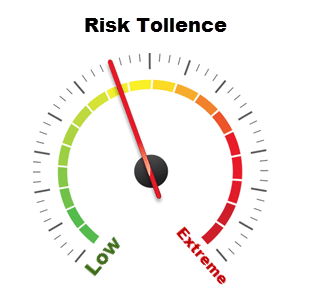
risk-gauge3rd on our Forex checklist is to know how much should you will be risking into each opened position?
This is where we move away from hard and fast rules, delving into opinions that fluctuate widely in the industry.
Typically accepted standards say that each trade should represent 2% of a fund’s total capital and many people stick rigidly to this. In truth though, there is no right or wrong answer and this is why it is so important to have gone through the previous stages of preparation before getting to this point.
The way to decide how much you put into each trade comes down to two things. Firstly how comfortable you feel with losing the total amount invested in one go, and secondly how confident you are in the outcome of the trade.
Put more simply, if you can’t set the trade and walk away from the computer, forgetting about the outcome until you log in again the next day. Then you are probably risking too much money.
Even career professional traders, the most successful ones at least, can turn off their computers at the end of the day, go back to their personal lives and enjoy a good night’s sleep. Set this as your benchmark for every trade. If you’re open trades are all that is on your mind through the day and are losing sleep at night over them, then you’re doing something wrong.
This is an important point on our Forex checklist. Think about every trade you take, you should already consider that money lost. If the trade comes back as a winner, that’s a bonus. Considering every trade a loser before you place it will help you determine a comfortable level of risk, decrease the chance you will emotionally intervene in the market, or let trading impact your normal life in a negative way.

FOCUS ON BECOMING AN AWESOME TRADER, NOT SOLVING YOUR FINANCIAL PROBLEMS

be-the-bestThis might sound strange because at the end of the day, people are drawn into investment of all kind to make more money.
People don’t open savings accounts to learn about national bank base rates. But with Forex, because of the high levels of volatility in the market, having your main focus as riches could put you in harm’s way.
If you stare at the chart you will probably find literally hundreds of ‘hindsight signals’ that appear every day which represent an opportunity to profit. If you are focused on chasing the money, you are possibly going to see a lot of these as “missed opportunities” and beat yourself up over not trading them.
Instead of setting your goal as retiring early with a load of cash, try approaching your Forex trading with the intention of being good at what you do, in this case becoming a good trader.
That way you will be realigning your focus towards perfecting your ability in the markets. If you can commit yourself to becoming a good trader and be passionate about it, the money will naturally flow in. If you focus on making money, then your account will probably slowly drain out. Welcome to the irony of the Forex market.
A football enthusiast trying to make the local team isn’t as bothered about that one great goal they fluked early in their career half as much as being considered a consistently reliable part of the team. If Forex is your sport, don’t think about winning “goal of the month” in your first year of trading, set your targets at being worthy of being selected for the national side.
Those who get into Forex wanting to gain a deep understanding of how the markets work to give themselves a solid knowledge, will go far. Those who are thinking solely of the dollars open themselves up to be blinded by greed and subsequently face some difficult consequences.

WRAPPING UP THE PRE FLIGHT FOREX CHECKLIST

Forex trading’s reputation is often tarnished from the countless stories about people blowing their savings or falling into serious debt from it. It’s not an easy profession to ‘master’ and we know that a lot of traders don’t reach their end game goal of full time Forex trading. Make sure you can afford to trade and never fall into the downwards spiral of treating your activity like a night at the roulette wheel. Check every point off on our pre flight Forex checklist.
Technology and the internet these days allows anyone to become a trader with a few clicks on a mouse and the tapping in of a credit card number. So many people come to this arena with no more planning and preparation than entering lottery numbers. The result, most of the time, is that the account is blown almost as quickly as it was opened. Sound familiar? Don’t worry, you’re not the only one, we’ve all been there.
Hopeully if you’re reading this though, you have realized (like me) that the market is no place to “play around”. Approach the market with a clear mind, focused preparation and the confidence to build your knowledge and understanding.
If you’re a bit lost in the market and find yourself struggling to make sense of what appears to be a ‘chaotic’ and ‘random’ market environment, you may be interested in our war room membership.
If you have a look around this site you will find that our approach to the market is simple, logical and consistent with our price action trading methodology. Our Price Action Protocol trading course is structured so you can formulate your own price action based trading plan that you can feel confident and comfortable trading.
Whatever approach you use with the market, make sure you understand clearly what you’re doing. Check off the points on the Forex checklist and only invest ‘spare’ or ‘play’ money. Be involved with Forex only with the intentions of becoming a good trader, not a fix for financial problems.
Have fun with it guys, and cheers to your professional future trading success. 
Money Management Checklist, what do you think of this?
Source By: Dale Woods